

Stonecrest Construction Debris Removal Services
Choose our Construction Debris Removal for fast, reliable, and eco-friendly service that keeps your site safe, organized, and ready for the next phase.
Get a Free QuoteOur Stonecrest Junk Removal Services
Construction Debris Removal in Stonecrest, GA – Local Service Guide
Construction debris removal in Stonecrest, GA, is essential for maintaining safe, attractive properties and supporting ongoing development in neighborhoods like Panola Road, Lithonia Industrial Boulevard, and the Arabia Mountain area. For residential items such as old appliances, mattresses, or hot tubs, removal often coincides with home renovations, seasonal cleanouts, or after major life events. Residents in Stonecrest frequently coordinate pickups during spring and fall, especially when replacing large items or clearing out sheds and garages. Options include donation, recycling, or proper disposal, with logistics shaped by driveway access, weather, and item size.
For residential spaces, garage and basement cleanouts spike after storms or during yard waste cycles, particularly in flood-prone or tree-heavy areas. Commercial clients—offices, restaurants, and warehouses in Stonecrest’s business corridors—require timely, discreet debris removal to minimize disruption, often generating higher volumes and needing flexible scheduling. Specialty services, such as dumpster rentals or estate cleanouts, are vital for foreclosures, hoarding cases, or major construction, requiring careful planning and coordination with local property managers.
Benefits of Construction Debris Removal in Stonecrest
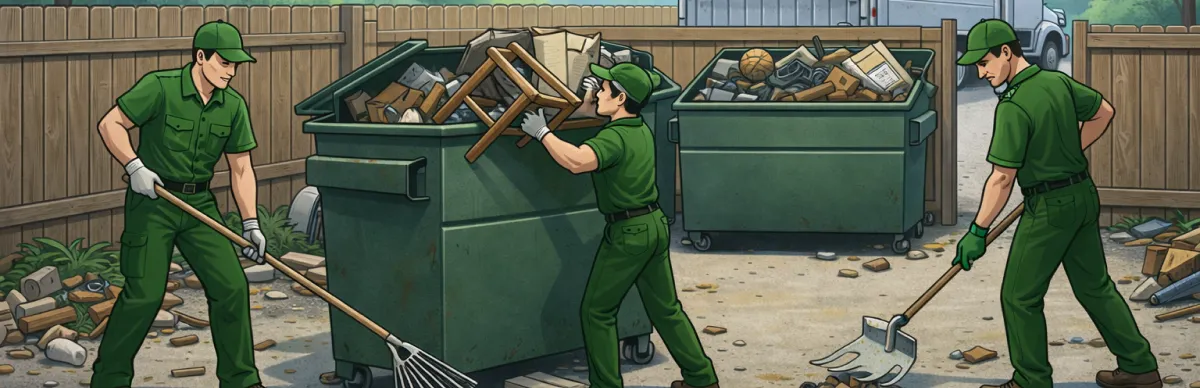
Fast and Reliable Cleanup
Safe Job Site Practices
Eco-Friendly Disposal Solutions
Cost-Effective Debris Removal
Experienced Local Professionals
Flexible Scheduling Options
Coordinating Construction Debris Removal with Stonecrest's Building Department and Permit Requirements
Construction and demolition projects in Stonecrest require proper coordination with municipal authorities before debris removal can begin. The Stonecrest Building Department oversees permits for renovation, demolition, and new construction activities that generate debris. Property owners and contractors must obtain applicable building permits before commencing work, and debris removal plans should align with permit conditions. Key requirements include:
- Building permits must be secured prior to any demolition or major renovation generating construction waste
- Demolition permits require documentation of asbestos and lead paint surveys for structures built before 1978
- Site cleanup timelines are typically stipulated within permit conditions, requiring debris removal within a specified period after project completion
- Contractor licensing is required for commercial haulers transporting construction debris within city limits
- Stormwater protection measures must be in place to prevent debris from entering storm drains during removal operations
Stonecrest Building Department
3120 Stonecrest Blvd, Stonecrest, GA 30038
Phone: (770) 224-0200
Official Website: Stonecrest Building Department
Failure to obtain proper permits before generating or removing construction debris may result in code violations and project stop-work orders.
Georgia's Solid Waste Management Act and Construction Debris Disposal Regulations
Construction and demolition debris in Stonecrest falls under the regulatory framework established by the Georgia Comprehensive Solid Waste Management Act (O.C.G.A. § 12-8-20) and enforced at the state level by the Georgia Environmental Protection Division (GA EPD). This legislation governs how construction materials must be sorted, transported, and disposed of at permitted facilities. Stonecrest property owners and contractors should be aware of the following state-level requirements:
- Construction and demolition (C&D) debris must be disposed of at facilities specifically permitted to accept such waste under Georgia Rules Chapter 391-3-4
- Inert waste landfills may accept concrete, brick, block, and uncontaminated soil, but mixed C&D loads require disposal at permitted C&D landfills
- Asbestos-containing materials must be handled by licensed abatement contractors and disposed of at facilities authorized to accept regulated asbestos waste
- Illegal dumping of construction debris carries penalties including fines up to $25,000 per day per violation under Georgia law
- Manifest documentation may be required for loads containing hazardous materials or regulated waste streams
Contractors operating in Stonecrest must ensure all debris is transported to GA EPD-permitted disposal or recycling facilities.
Material Sorting and Separation Requirements for Stonecrest Construction Projects
Proper sorting of construction debris at the job site is essential for regulatory compliance and maximizing material recovery. DeKalb County, which provides waste infrastructure services for the Stonecrest area, encourages diversion of recyclable construction materials from landfills. Effective on-site separation reduces disposal costs and supports environmental stewardship goals. Construction debris should be sorted into the following categories:
- Concrete, brick, and masonry — eligible for crushing and reuse as aggregate; accepted at inert waste facilities
- Clean wood and lumber — untreated wood may be recycled or mulched; painted or treated wood requires separate handling
- Metals (steel, copper, aluminum) — scrap metal recyclers accept structural steel, rebar, wiring, and plumbing fixtures
- Drywall and gypsum board — recyclable at specialized facilities; must be kept dry and separated from other debris
- Roofing materials (asphalt shingles) — some facilities accept shingles for recycling into road paving material
- Mixed debris — unsorted loads are typically charged higher disposal fees at C&D landfills
DeKalb County Public Works
1580 Roadhaven Drive, Stone Mountain, GA 30083
Phone: (404) 294-2900
Official Website: DeKalb County Public Works
Contractors should establish designated sorting areas on-site before demolition or renovation work begins to facilitate efficient debris separation.
Hazardous Material Handling and Safety Compliance for Stonecrest Demolition Debris
Construction debris removal in Stonecrest frequently involves materials that require specialized handling under federal and state safety regulations. Structures built before 1978 may contain lead-based paint, and buildings constructed before 1980 may have asbestos-containing materials in insulation, floor tiles, roofing, and pipe wrapping. The EPA Renovation, Repair, and Painting Rule and OSHA construction safety standards impose strict requirements on debris handling:
- Asbestos surveys must be conducted by accredited inspectors before demolition of older structures; friable asbestos requires licensed abatement
- Lead-based paint debris from pre-1978 buildings must follow EPA lead-safe work practices, including containment and proper disposal
- Chemical containers such as paint cans, solvents, adhesives, and sealants found during renovation are classified as hazardous waste and cannot be disposed of with regular C&D debris
- Refrigerant-containing equipment (HVAC units removed during renovation) requires certified refrigerant recovery per EPA Section 608 regulations
- Treated lumber (CCA-treated wood) should not be burned or mulched and requires disposal at permitted facilities
DeKalb County Fire Rescue Department
1950 West Exchange Place, Tucker, GA 30084
Phone: (404) 294-2900
Official Website: DeKalb County Fire Rescue Department
Workers handling hazardous construction debris must have appropriate OSHA training, personal protective equipment, and documentation of proper disposal methods.
Stonecrest Code Enforcement and Stormwater Protection During Debris Removal Operations
Stonecrest Code Enforcement actively monitors construction sites for compliance with property maintenance standards and debris management requirements. Construction debris left on properties beyond permitted timelines, scattered into neighboring lots, or deposited in public rights-of-way may trigger code violations and enforcement actions. Additionally, DeKalb County Watershed Management enforces stormwater pollution prevention measures that directly affect how construction debris is managed on-site. Key compliance considerations include:
- Debris containment — all construction waste must be contained on the project site and not allowed to migrate onto adjacent properties or public streets
- Erosion and sediment control — silt fences, inlet protection, and stabilized construction entrances are required to prevent debris and sediment from entering stormwater systems
- Timely removal — accumulated debris must be removed at regular intervals; large stockpiles may require temporary screening or fencing
- Right-of-way clearance — trucks loading or unloading debris must not obstruct public sidewalks, roadways, or drainage infrastructure without proper authorization from Stonecrest City Engineering
- Violation penalties — code enforcement citations may include fines, mandatory cleanup orders, and potential permit revocation for repeat offenders
Stonecrest Code Enforcement
3120 Stonecrest Blvd, Stonecrest, GA 30038
Phone: (770) 224-0200
Official Website: Stonecrest Code Enforcement
Property owners bear ultimate responsibility for ensuring construction debris is managed in compliance with all applicable municipal and county regulations.
What Neighborhoods Do We Serve Throughout Stonecrest, GA?
- Arabia Mountain Corridor: Residential developments near the Arabia Mountain National Heritage Area feature newer single-family homes with wide driveways and accessible streets. Construction debris from home additions and renovations is common; proximity to natural areas requires strict erosion and sediment control during removal operations.
- Klondike Road Area: This established residential corridor includes older homes that may contain asbestos or lead-based paint in building materials. Contractors should conduct hazardous material surveys before demolition, and debris trucks must navigate moderate-width residential streets.
- Stonecrest Mall District: Commercial renovation and tenant buildout projects generate significant volumes of construction debris including drywall, ceiling tiles, and flooring materials. Loading dock access and coordination with property management for debris staging areas are typically required.
- Lithonia Industrial Corridor: Warehouse and light industrial properties along this corridor produce heavy construction debris including concrete, steel, and masonry. Truck weight limits on certain roads may require load planning and route coordination with Stonecrest City Engineering.
- Covington Highway Corridor: Mixed-use development along this major thoroughfare involves both residential and commercial construction debris. Right-of-way considerations and traffic management during debris loading require advance coordination with municipal authorities.
- Browns Mill Road Communities: Established single-family neighborhoods with mature tree canopy may present overhead clearance challenges for debris removal equipment. Older homes in this area frequently require careful material assessment before renovation debris is removed.